

Buying Guide
How to use technology to promote your brand
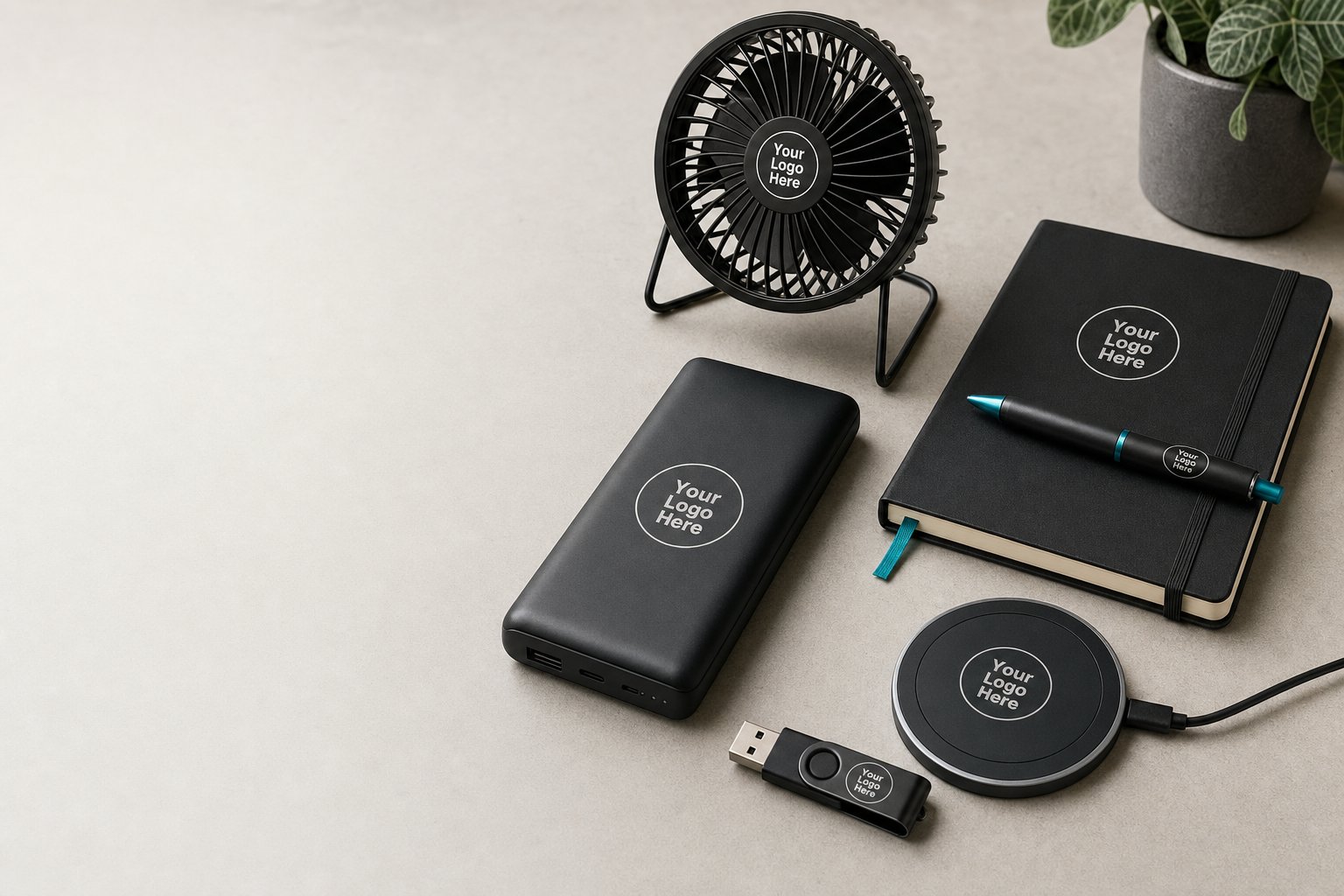
Technology is useful, it has a high perceived value therefore its more likely to stick around giving brand awareness. Products include desktop USB items, chargers, fans, powerbanks etc
Start here: is tech the right route for your campaign?
Help decide whether a tech promotional item will meet your campaign goals and suit your recipients.
Technology gifts tend to carry high perceived value and a strong chance of continued use, which helps extend brand exposure. This section helps you quickly judge whether a tech item is a good fit for your audience and objective.
Look for these indicators that tech is an appropriate choice:
- Recipients are likely to use the item daily (commuters, office workers, field teams).
- You want a premium-feel leave‑behind or executive gift rather than a purely disposable giveaway.
- Your brand message benefits from repeated visibility rather than a one‑off moment.
If your priority is very low cost per unit or one‑time event handouts, non‑tech items may still be better. If you’re unsure, consider a small pilot run or a mixed pack that pairs a tech item with a lower‑cost branded accessory.
How tech items compare: common product categories and trade-offs
Compare realistic options so readers can weigh pros and cons between popular tech categories and choose what aligns with their goal.
Each tech product category brings a different balance of perceived value, branding surface, ease of use and logistical considerations. Below are pragmatic comparisons of common choices.
- Powerbanks — High perceived value and frequent use. Great for events and travel‑focused audiences. Considerations: battery safety rules and the need to check shipping restrictions.
- Wireless chargers — Modern, premium feel and easy daily visibility on desks and bedside tables. Consider device compatibility and ensure the charging standard matches recipients’ devices.
- Branded USB sticks — Useful for file transfers and training materials; low profile and cost‑effective for handouts. Consider move towards cloud storage in some sectors which may reduce utility.
- Desktop USB gadgets (fans, lamps) — Good for offices and desks; high novelty value. Consider build quality and long‑term durability.
- Audio items (earbuds, speakers) — High perceived value but can be complex: expect higher unit costs, and confirm quality and warranty details with your supplier.
Trade-offs to keep in mind: perceived value vs cost, brand imprint area vs item aesthetics, and compliance or shipping constraints for battery‑powered items. Always check safety, warranty and shipping guidance with suppliers before committing.
Selection checklist: what to evaluate before you brief a supplier
Provide practical selection criteria so buyers can prepare a concise brief and quickly compare supplier proposals.
Use this checklist when evaluating products and when preparing a brief for quotes. It helps you compare like‑for‑like proposals and avoid hidden surprises.
- Audience and use case — Who will use it and where (desk, travel, outdoor)?
- Perceived value target — Do you need premium impact or a practical everyday item?
- Branding needs — Logo size, colour fidelity and preferred placement.
- Compatibility and technical fit — Charging standards, connectors, device compatibility.
- Durability and finish — Expected lifespan and preferred materials.
- Sustainability priorities — Recycled materials, packaging choices or take‑back options.
- Logistics to confirm with suppliers — imprint proofs, sample availability, minimum order quantities and shipping constraints (especially for batteries).
- Budget band — A realistic per‑unit budget helps suppliers propose suitable options; avoid asking for exact prices in this guide.
Having clear answers to these points will make proposals easier to compare and speed up decision‑making.
Branding and finish: making your logo work on tech
Explain how branding decisions affect appearance, cost and durability so readers can choose the right finish for their brand identity.
Branding on tech items is as much about finish and placement as it is about logo size. Different methods give different impressions and durability.
- Print finishes (pad or screen printing) deliver full‑colour logos on plastics and fabrics, but small details may lose clarity at reduced sizes.
- Laser engraving gives a premium, durable result on metal or hard finishes, ideal for subtle executive gifts.
- Domed or UV print can add depth and protect the logo, useful for items handled frequently.
- Consider contrast and legibility — light logos on dark surfaces (or vice versa) work best for quick recognition.
Discuss proof options with your supplier and request digital mock‑ups and, where possible, a physical sample to confirm colour, contrast and overall look before approving a full run.
Procurement and risk considerations
Highlight logistical and risk factors buyers commonly need to confirm before committing — so nothing important is overlooked.
Tech items often involve extra procurement checks compared with simple giveaways. Use these reminders when you review supplier responses.
- Health and safety and battery regulations — Battery‑powered items may have shipping or storage restrictions; check with suppliers and logistics partners.
- Warranty and returns — Clarify warranty coverage and sample testing processes with the supplier.
- Sample review — Always request a physical sample where possible to validate build quality and branding finish.
- Data security — For USB devices or smart products, ask about options to supply devices without pre‑loaded data, or sanitised to your specification.
- Packaging — Packaging affects perceived value and sustainability; confirm options and whether individual retail boxes are required.
These topics are practical checkpoints rather than comprehensive rules. Confirm specifics with suppliers and your internal procurement or compliance teams.
Decision ready: next steps for confident buying
Give a clear, practical next step so the reader can move from planning to action with a concise brief to suppliers.
When you’re ready to get quotes, use a short, focused brief to make supplier responses comparable and to speed decision‑making.
Include these essentials in your supplier brief:
- Audience description and intended use.
- Target budget band (per unit) and approximate order size range.
- Preferred products or examples (e.g. powerbank, wireless charger, USB stick).
- Branding requirements — logo files, preferred placement and any colour matching needs.
- Must‑have constraints — battery rules, packaging or sustainability requirements, delivery window.
Ask each supplier for a digital mock‑up, sample availability and clear notes on minimum order quantities, lead times, shipping constraints and warranty terms. Confirm these details in writing before placing an order. If you’d like help drafting a brief or evaluating supplier replies, contact your account manager for a bespoke checklist and sample review support.