

Buying Guide
How to choose the right promotional bag for your business
High Usefulness: Sports events need sports bags. People always need help carrying groceries, books, or gym gear, meaning they reuse bags often. Lots of Views: A single durable bag can give a brand thousands of visual impressions in public over its lifespan.Eco-Friendly Appeal: Reusable fabric or jute bags show that a business cares about reducing plastic waste.
Start with how the bag will be used
Help the reader define the primary use and audience so they can narrow choices quickly.
Begin by identifying the main use-case. A bag used for muddy sports kit has very different needs from a complimentary tote given at a conference. Being clear about use narrows fabric, size and closure choices.
Questions to answer up front:
- Who will carry the bag and where (sports pitch, commuter, conference delegate)?
- What will go inside it (heavy kit, single item, brochures, laptop)?
- How long should it last — single event, seasonal use, multi-year?
Keeping these answers simple makes the rest of the selection faster and prevents unnecessary features or cost.
Compare common bag types and their trade-offs
Give a clear overview of realistic bag options and the practical advantages and compromises of each.
Different styles suit different needs. Below are common choices and the trade-offs to consider.
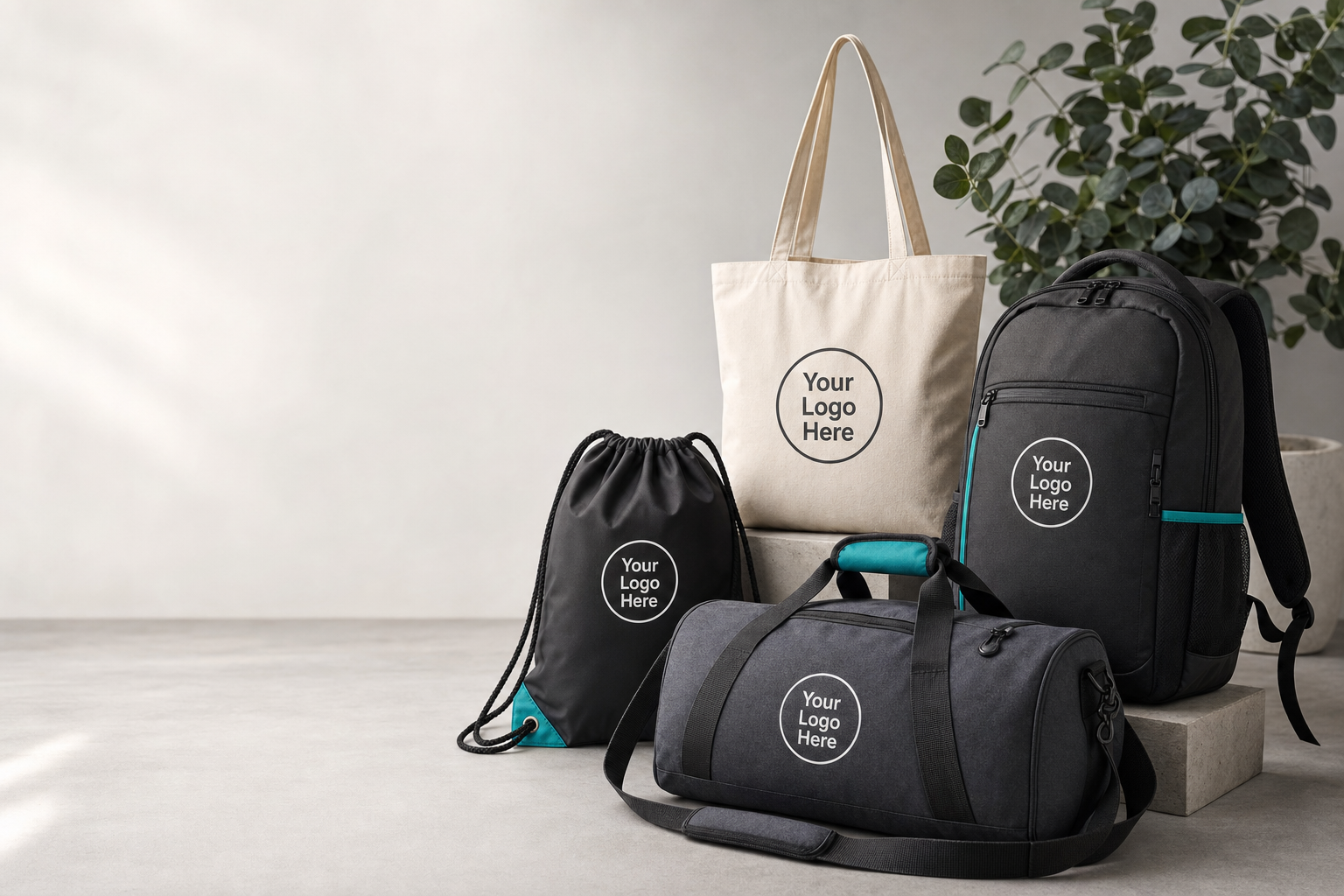
- Drawstring sack: Lightweight, low cost, compact. Good for giveaways and single-item storage. Less protection and lower capacity for heavy loads.
- Tote bag (canvas or cotton): Simple, reusable, good branding area. Works well for retail, events and retail-style giveaways. Durability varies by fabric weight.
- Sports duffel: Larger capacity, easy to carry for teams and travel. Offers more compartments but is bulkier and generally higher cost.
- Backpack: Hands-free, suitable for commuters, students and event attendees. Offers organisation and comfort for heavier loads.
- Conference or exhibition bags: Often a compromise between tote and backpack with pockets for literature. Designed for carrying brochures and promotional material.
Match the type to who will use the bag and how often — durable, useful items are more likely to be kept and reused, increasing impressions for your brand.
Materials, durability and environmental considerations
Help the reader weigh material choices and sustainability implications without assuming specific certifications or claims.
Material choice affects look, durability and environmental impact. Common materials include cotton, canvas, polyester, recycled polyester and jute — each has pros and cons.
- Natural fibres (cotton, jute) tend to feel premium and can communicate an eco message, but durability and washability vary with weave and weight.
- Synthetic fibres (polyester, recycled polyester) are often more water-resistant and hard-wearing for outdoor or sports use.
- Recycled materials reduce virgin resource use, but the exact environmental benefit depends on the supply chain and finishing processes.
Ask suppliers for specific fabric weights, care instructions and details about recycled content or end-of-life options. Don’t rely on broad claims — request evidence where sustainability claims are important to your brand.
Branding, print methods and visual impact
Explain how different branding options affect cost, durability and appearance so readers can choose the right print approach.
How you brand the bag will influence the finish and longevity of your artwork. Common approaches include screen printing, digital transfer, embroidery and woven labels. Each suits different designs and fabrics.
- Screen printing is durable and cost-effective for bold, flat-colour logos on many fabric types.
- Digital transfer or full-colour printing handles photographic designs and complex colour blends but can behave differently on textured fabrics.
- Embroidery adds a premium tactile finish and lasts well on thicker materials, but fine detail may be lost on small logos.
- Woven labels or patches provide a durable, upscale look for brands seeking a subtle detail.
Consider logo size, contrast with the bag colour, and print placement. Ask for mock-ups and, if possible, a physical sample to check colour, scale and how the print sits on the chosen fabric.
A practical selection checklist and next step
Provide a concise action checklist to finalise a decision and a clear next step that moves the reader toward an order without overcommitting.
Use this quick checklist to confirm your choice before requesting quotes or samples:
- Confirm the primary use and target audience.
- Choose the bag style that matches capacity and comfort needs.
- Select a material balancing durability, look and sustainability priorities.
- Decide on branding method(s) and preferred print positions.
- Request a mock-up and, if practical, a physical sample to verify colours and print quality.
- Clarify any supply questions with your supplier — fabric weight, wash instructions and exact print specifications.
Next step: contact a supplier (or your Mindvision Workspace account manager) with your brief: intended use, ideal bag styles, branding artwork and any sustainability priorities. Ask for mock-ups and samples before approving full production, and confirm all technical details in writing.