

Buying Guide
How do I choose the correct writing instrument my business needs
Best quality and price to match your business image, is it something that will be used once then thrown away? Is it something that is going to be kept and cherished such as a high quality engraved pen? Does it display your logo cleanly and are the colours easily recognisable as your brand.
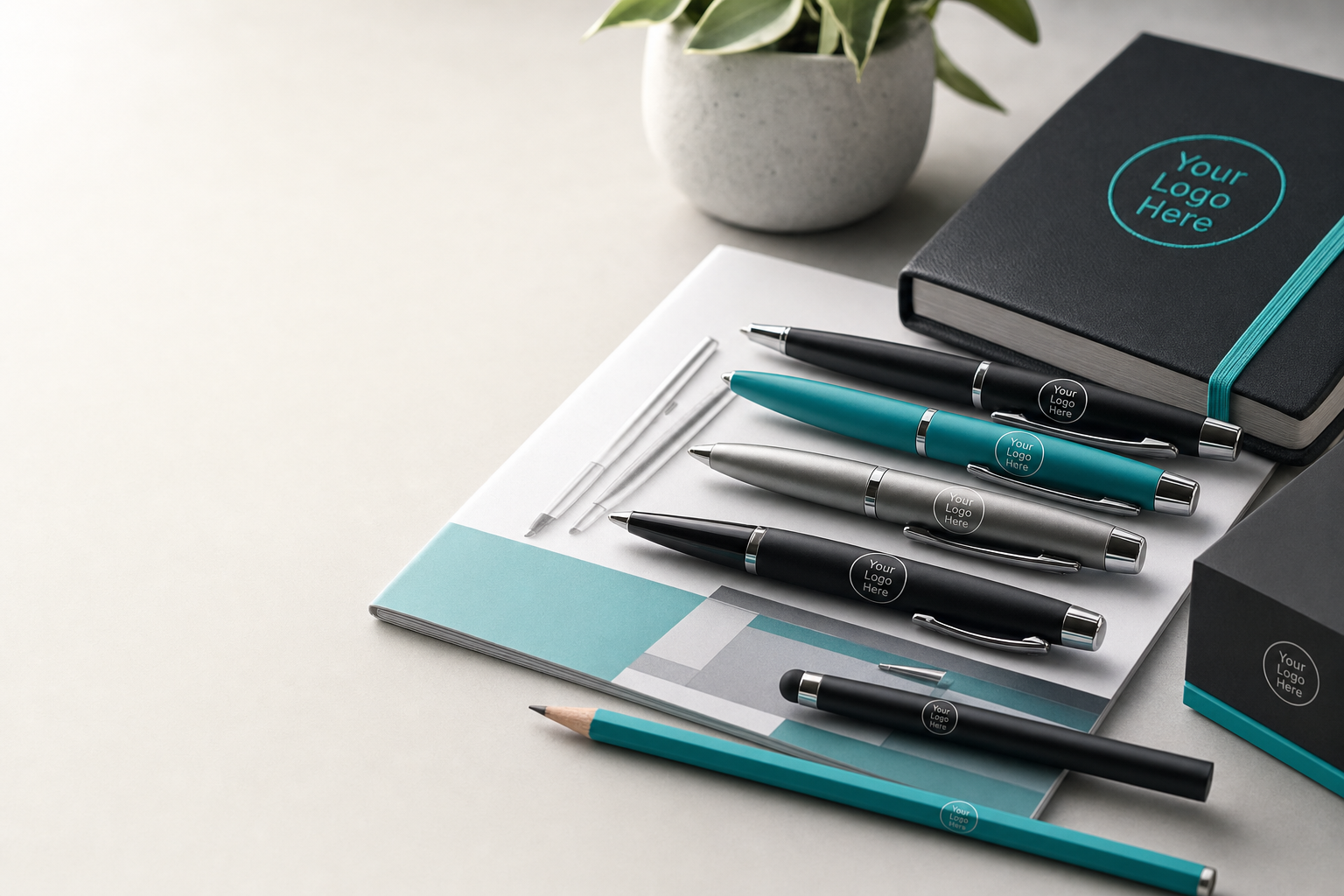
Start by clarifying how the item will be used
Help you decide what function the writing instrument needs to fulfil and the impression it should make.
Begin with practical questions that define the product brief. Different uses demand different qualities: a short-lived giveaway at a busy exhibition versus a gift for premium clients will lead to very different choices.
- Who is the recipient? (clients, conference attendees, staff, hotel guests)
- What impression should it convey? (everyday utility, premium keepsake, eco-aware)
- How long should it last in typical use?
- Will it be replaced often or kept and cherished?
- Is matching exact brand colour and logo clarity important?
Use answers to these questions to prioritise durability, finish and branding options. Confirm specific requirements and tolerances with potential suppliers before committing.
Compare the main product families and their trade-offs
Show realistic options and the typical pros and cons so you can match product family to purpose and audience.
Understand the broad categories so you can make an informed shortlist. Each family suits different needs and budgets.
- Disposable ballpens – widely used, cost-effective for large giveaways; lower perceived value.
- Refillable ballpoints and rollerballs – better for client gifts and staff use; more sustainable and higher perceived value when refilled.
- Metal or engraved pens – premium appearance, suitable for executive gifts or VIPs; consider weight and finish.
- Mechanical pencils – appreciated in certain sectors (design, finance); offer a different tactile experience.
- Stylus and hybrid pens – useful for hotels and events where devices are used; check tip compatibility.
Trade-offs include cost per unit versus longevity and perceived quality. Where exact performance matters (e.g. refill types, stylus materials), request technical details from suppliers.
Material, finish and how they affect perception
Explain how material and finish choices influence brand perception and durability so you can pick the right look and feel.
The material and finish are major contributors to perceived quality. Choose features that reflect your brand while remaining practical for the intended use.
- Plastic – economical, light, and available in many colours; fine for high-volume giveaways.
- Metal (brass, aluminium, stainless) – heavier and more durable; often used for premium gifts.
- Finishes – matte, gloss, lacquered, or brushed metal each create a different impression; some show fingerprints more than others.
- Presentation – a case or box elevates value, especially for executive gifts.
Decide whether tactile qualities (weight, balance, smoothness) or visual finish matter more. Ask suppliers for physical samples to evaluate finish and feel; colour matching and finish durability should be confirmed in writing.
Logo reproduction and colour considerations
Guide decisions about logo placement, print methods and legibility for small surfaces so your branding reads cleanly.
Brand visibility on a small surface requires careful planning. Not every logo or colour application will work equally well on every pen type.
- Consider logo size and complexity; fine detail may not reproduce well on small or textured surfaces.
- Common print methods include pad printing, screen printing, laser engraving and debossing — each has different results and limits.
- Single-colour prints are generally clearer; multi-colour reproduction may be possible but depends on the method and the available print area.
- Colour matching (Pantone) is possible with many processes but can vary by material — always request printed colour proofs or pre-production samples.
Request mock-ups and physical samples from suppliers to verify legibility and brand colour reproduction before approving a production run.
Practical selection criteria: ink, ergonomics and sustainability
Help you compare functional attributes that affect user experience and ongoing suitability for your audience.
Functional choices influence how much the item is used and who will appreciate it. Balance user comfort with environmental and operational considerations.
- Ink type – ballpoint, gel and rollerball pens feel different and write differently; choose based on typical writing needs.
- Refillability – refillable pens extend product life and can be more economical and sustainable over time.
- Ergonomics – grip diameter, weight and balance matter for frequent users.
- Packaging – simple sleeves for giveaways, presentation boxes for premium gifts; packaging affects perceived value and unboxing experience.
- Sustainability – recycled materials or refillable designs reduce waste, but confirm any environmental claims or certifications with the supplier.
Use these criteria to create a short list of items to sample. Where sustainability or technical specs are important, ask for documented evidence from the supplier.
Decide with confidence: shortlist, sample and confirm
Provide a clear, practical next step so you can move from shortlist to a final order with confidence.
Turn your priorities into action with a simple, low-risk process.
- Create a shortlist of two to four options that match your use-case and brand impression.
- Request physical samples and printed mock-ups so stakeholders can assess feel, finish and logo reproduction.
- Confirm production methods, colour matching, minimum order quantities and any guarantees with suppliers in writing before placing an order.
- Allow time for internal sign-off and final checks — get a pre-production sample if possible.
Next step: select two suppliers and request samples and a detailed specification sheet. That will give you the evidence you need to make a final, confident choice.