

Buying Guide
Choosing the best promotional clothing for your business
Good fit, quality of material, suitable for branding, how it will be branded, how long it takes, good value
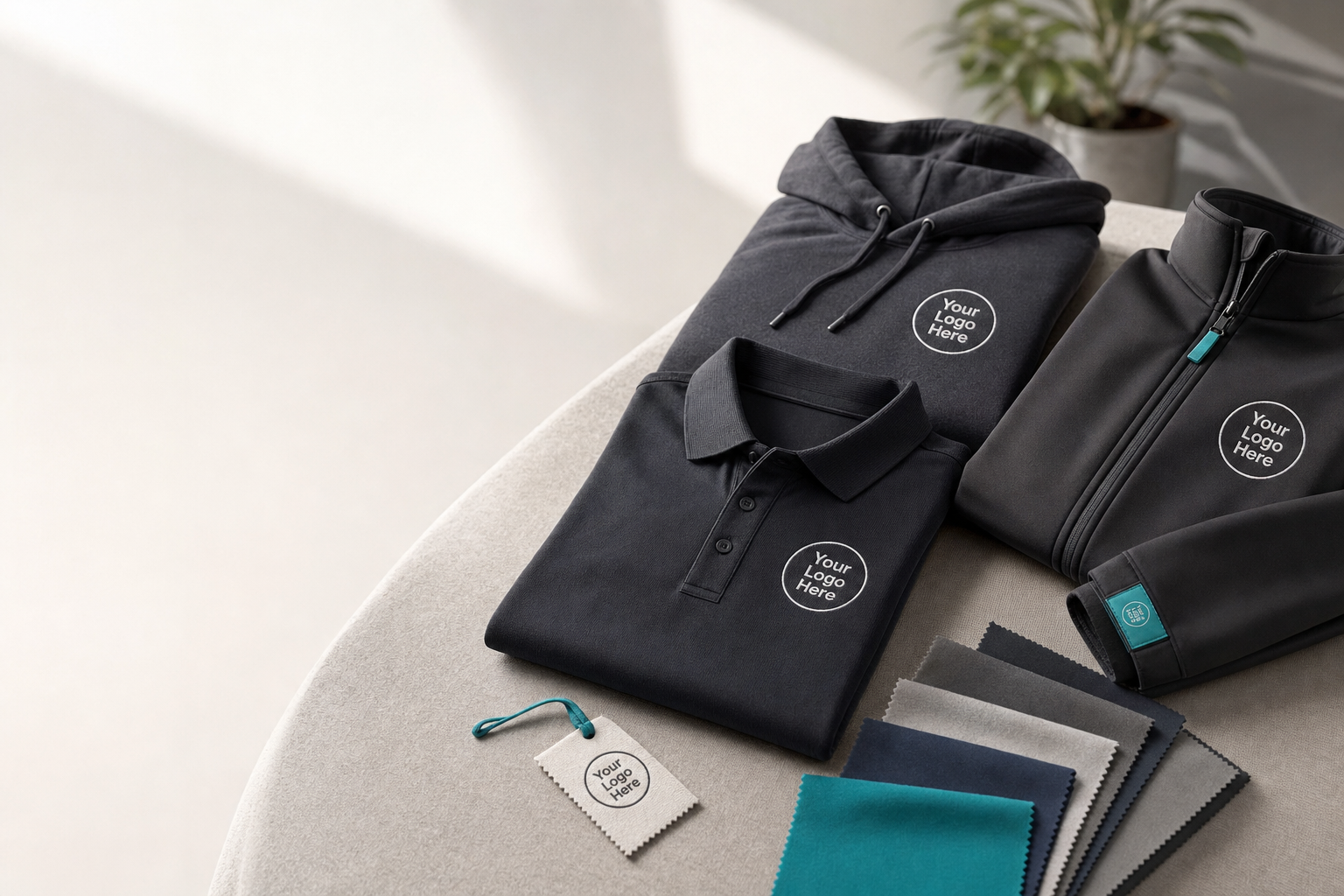
Where to start: clarify what you want the clothing to do
Help the buyer decide the primary goal for their promotional clothing so choices align with event, audience and brand objectives.
Before you look at styles or suppliers, define the practical role of the clothing. Are the items giveaways for a one-off event, uniforms for frontline staff, rewards for clients, or retail-quality merch? Different uses call for different materials, branding approaches and budgets.
- Identify the setting: indoor events, outdoor work, everyday wear or occasional use.
- Define the audience: customers, staff, trade show visitors or partners.
- Decide the message: visibility (high-impact logo), subtle brand cues (tone-on-tone embroidery) or a merchandise-led design.
Having a clear objective narrows the options and makes subsequent decisions — about fit, fabric and branding — much easier.
Key selection criteria at a glance
Summarise the practical factors to compare when evaluating styles and suppliers.
When comparing garments, use a consistent checklist. This keeps discussions with suppliers focused and ensures you compare like for like.
- Fit and sizing: range of sizes, gender-neutral vs tailored cuts, and sizing charts.
- Material and durability: fabric weight, knit or woven, expected lifespan for the use-case.
- Branding options: embroidery, screen print, heat transfer, woven labels and their suitability for each fabric.
- Care and appearance: washability, colourfastness and how the garment will age.
- Cost vs value: unit cost balanced with perceived quality and intended lifespan.
- Sustainability and traceability: recycled content, responsible sourcing and the supplier’s transparency (confirm specifics with suppliers).
Use these criteria to score options and to structure questions when you request samples or quotes.
Materials and construction: matching durability to use
Explain how fabric choice and construction affect longevity, comfort and branding suitability.
Different fabrics perform in different ways. Your choice should match how and how often the garments will be worn.
- Cotton and cotton blends: comfortable and breathable, often preferred for casual wear. Blends can improve durability and reduce shrinkage.
- Polyester and technical fabrics: good for activewear and outdoor use due to quick-drying and colour retention, and they often accept sublimation or certain print types better.
- Heavier woven fabrics: used for jackets and workwear where structure and abrasion resistance matter.
- Construction details: look at stitching, reinforcement in stress areas and quality of finishes — these influence how well a garment stands up to repeated use.
Ask suppliers for fabric spec sheets and, where possible, request a sample so you can check feel, drape and how different branding techniques look on the material. Confirm any performance or care claims with the supplier rather than assuming.
Fit, sizing and wearer experience
Help you assess sizing, cut and user comfort to reduce returns and improve wearer satisfaction.
A good-looking logo won’t matter if the garment doesn’t fit the wearer. Consider both size range and cut.
- Sizing charts: insist on clear size charts and measurements in centimetres. Sizes can vary by brand and cut.
- Cut and style: consider unisex, women’s and tailored options depending on your audience. Think about sleeve length, necklines and ease of movement.
- Try before you buy: request physical samples in a range of sizes so staff or typical recipients can judge fit and comfort.
- Clear communication: include suggested sizing guidance when distributing items (e.g. model measurements or fit notes) to reduce disappointment.
Samples and fit checks are the most reliable way to avoid sizing problems — make them a standard part of the selection process.
Branding methods and visual impact
Compare common decoration techniques and their trade-offs in appearance, cost-effectiveness and durability.
How you apply your logo affects the look, cost and longevity of the item. The right method depends on the fabric, artwork complexity and the effect you want.
- Embroidery: durable and premium-looking, great for polos and jackets, but less suitable for very fine detail or thin fabrics.
- Screen print: cost-effective for bold designs and larger runs; works well on cottons and blends.
- Heat transfer and vinyl: useful for complex or photographic designs and small runs, though durability varies by material and care.
- Sublimation: produces all-over prints on polyester fabrics with excellent colourfastness, but only works on suitable synthetics.
- Labels and tags: woven labels or neck prints can give a more sophisticated, retail feel.
Ask suppliers for mock-ups, stitch or print samples, and information on how each method will withstand washing and wear. Confirm with them which technique they recommend for your specific garment and artwork.
Balancing budget, sustainability and perceived value
Guide trade-offs between cost control, responsible sourcing and the impression the clothing will make.
Budget matters, but cheapest is not always best. Think about total value: how long items will be kept and how they reflect your brand.
- Unit cost vs lifespan: a slightly higher-cost garment that gets worn more often can be better value than a cheaper item that’s discarded quickly.
- Sustainability choices: recycled fibres and responsibly sourced materials can align with brand values. Ask suppliers for verifiable information rather than assuming.
- Batch sizes and consolidation: discuss options with suppliers to reduce waste and manage inventory sensibly — confirm minimums and other order constraints directly.
When sustainability is a priority, request documentation from suppliers and consider whether traceability or end-of-life recycling options are important to your organisation.
Next step: how to move from shortlist to confident order
Provide a clear, practical set of actions to finalise your choice and begin production with confidence.
Follow a short, focused process to avoid delays and miscommunication.
- Refine your shortlist to two or three garments and request physical samples in the key sizes you’ll need.
- Ask suppliers for mock-ups or proofs of your artwork on the exact fabric and confirm recommended decoration methods.
- Check the supplier’s return/sample policy and clarify any questions on sizing, care labels and packaging.
- Confirm lead-time, minimum quantities and any additional costs directly with the supplier before committing.
- If sustainability or certification matters, request supporting documentation and ask about traceability.
When in doubt, order a small pre-production batch or pilot run to validate fit, print quality and wearer reception before a larger order. Your account manager or supplier should be able to guide you through sample approval and production steps — confirm those details with them.